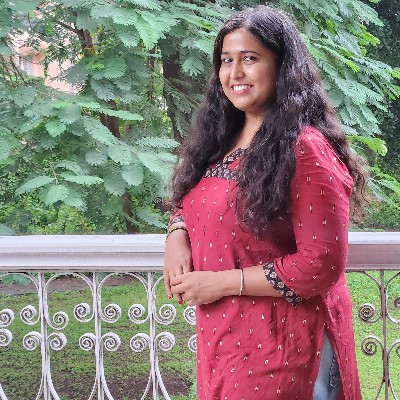
Her eyes held pride,
Yet they were misty.
Her heart and mind stood in solidarity with her partner,
jailed for fighting for the oppressed
But her tears would not listen.
She would not dare ask,
“Was it worth it?
To throw away both of our lives?
To become oblivious to the very masses you fought for?”
She could only breathe
with all the energy she had,
clinging to hope,
waiting for him to come home.
The last data from the National Crime Records Bureau, in 2022, show that the number of undertrial inmates numbered 4,34,302 or 75.8 per cent of total prisoners. Between 2016 and 2020, 24,134 individuals have been charged with the Unlawful Activities (Prevention) Act (UAPA) alone, only 386 of whom have reportedly been acquitted.
The BK16–16 activists arrested In the Bhima Koregaon case, 2018
Varavara Rao, Gautam Navlakha, Sudha Bharadwaj, Anand Teltumbde, Rona Wilson, Sudhir Dhawale, Mahesh Raut, Shoma Sen, Arun Ferreira, Vernon Gonsalves, Stan Swamy (died in custody), Hany Babu, Sagar Gorkhe, Ramesh Gaichor, Jyoti Jagtap, and Surendra Gadling.
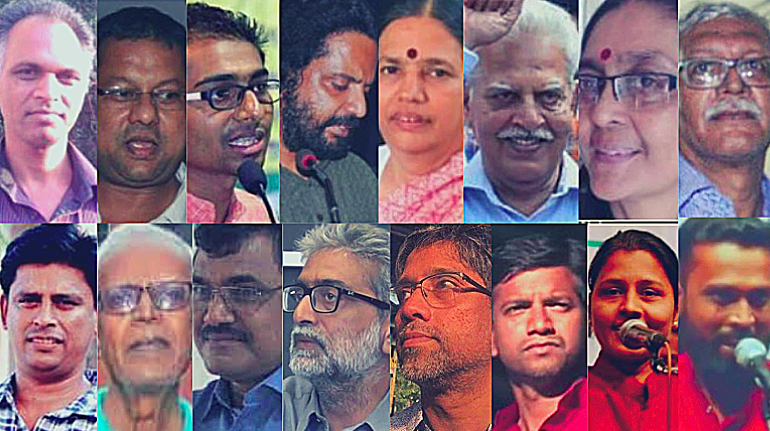
Behind these 16 names are the lives and livelihoods of so many people who depended on them. The people they fought for spoke for, left defenceless against the arbitrary system. The actual toll is on the families of people who are in jail without trial.
Surendra Gadling- The human rights lawyer, Dalit rights activist from Nagpur is the only one of the Bhima Koregaon-16 still in jail. He has been detained without trial. He reportedly suffers from hypertension, diabetes, cardiac disorder, syncope, and lumbar and cervical spondylitis.
Umar Khalid from JNU who was arrested in September 2020 under UAPA allegedly inciting people through his speeches before the Delhi riots that occurred in February 2020.
Sharjeel Imam was arrested in Jan 2020 for participating in peaceful protests opposing the discriminatory Citizen Amendment Act (CAA) in December 2019 and January 2020.
These were about the political prisoners who are intentionally kept in Jails to break their spirits and discourage others to dissent.
Many others suffer in prison without any hope.
The situation of undertrial prisoners in India represents a significant systemic failure where nearly 70% of the prison population consists of individuals who are legally presumed innocent. This crisis is driven by several interconnected factors:
- Violation of Fundamental Rights: Protracted judicial delays mean that many undertrials spend more time in prison than the maximum sentence for their alleged crimes, violating the right to a speedy trial under Article 21.
- Ineffective Legal Aid: Although the right to counsel begins at the moment of arrest, poor prisoners often lack access to competent lawyers, and legal aid services are frequently overburdened and ineffective in practice.
- Aggressive Arrest Practices: Despite judicial directions that arrest should be a “last resort,” police often arrest individuals as a “first reaction” to seem tough on crime, which significantly increases the undertrial population.
- Bail Barriers: While Indian jurisprudence maintains that “bail is the rule, jail is the exception,” the process is often too complicated or expensive for poor individuals who cannot provide sureties or navigate the paperwork.
- Administrative Failures: Lack of coordination between courts and prisons can lead to “shocking” incidents where individuals remain incarcerated for months or even years after being granted bail simply because orders were not properly communicated.
- Overcrowding and Risks: Indian prisons are often packed to three or four times their capacity, forcing innocent undertrials into high-risk environments with hardened convicts and poor sanitation.
Demographic and Socio-Economic Profile
The crisis disproportionately affects the most vulnerable segments of society:
- Youth: Nearly 46.8 percent of inmates belong to the 18–30 age group, resulting in a significant loss of productive years and economic potential for the nation.
- Illiteracy and Poverty: Over two-thirds of undertrials are either illiterate or have only a primary school education, leaving them largely unaware of their legal rights. Most are from economically backward classes and cannot afford the bail bonds required for their release.
- Marginalized Communities: Scheduled Castes (SC), Scheduled Tribes (ST), and Muslims account for a high 53 percent of total undertrial prisoners, despite making up only 39 percent of the general population.
- Women and Children: Women represent 4.6 percent of unconvicted prisoners, many of whom are forced to live with their children inside overcrowded and poorly equipped facilities.
Systemic Causes for the Backlog
- Judicial Vacancies: India has one of the world’s lowest judge-to-population ratios (15 per million). Thousands of posts remain vacant in both High Courts and subordinate courts.
- Police and Prosecution Failures: Police often fail to finish investigations or file charge-sheets on time. Furthermore, an estimated 60 percent of all arrests are deemed unnecessary, often used as a first reaction rather than a last resort.
- Underfunded Infrastructure: The judiciary was allocated less than 1 percent of the total budget in 2014–15. Prisons are understaffed, and public prosecutors often lack basic facilities like office space or legal databases.
- Dysfunctional Bail System: While the principle is “bail, not jail,” the system is weighted against the poor who cannot provide sureties or navigate complex legal procedures.
Legal Framework and Judicial Response
- Section 436A CrPC: This provision allows undertrials to be released on a personal bond if they have served half of the maximum prison term for their alleged offense.
- Bhim Singh v. Union of India (2014): In this landmark case, the Supreme Court directed judicial officers to fast-track the release of prisoners under Section 436A and set a strict two-month deadline for oversight.
- Right to Speedy Trial: The Supreme Court established in Hussainara Khatoon (1979) that a speedy trial is a fundamental constitutional right under Article 21.
Proposed Solutions (The Way Forward)
The sources suggest a comprehensive overhaul rather than “kneejerk” reactions:
- Legal Aid Reform: Overhauling the ailing legal aid system and potentially introducing a Public Defender system similar to those in the US or Latin America.
- Alternative Dispute Resolution (ADR): Increasing the use of plea bargaining, Lok Adalats, and mediation to resolve petty crimes quickly.
- Technological Integration: Implementing e-courts and video conferencing between prisons and courts to reduce the logistical burden and cost of transporting prisoners.
- Administrative Oversight: Revamping Undertrial Review Committees (URC) at the district level to ensure regular monitoring of cases.
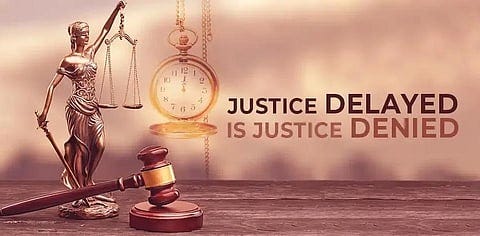
The Supreme Court of India’s recent efforts to address the chronic issue of delayed judgments in High Courts. Drawing on the Ravindra Pratap Shahi v. State of U.P. case, the article details new judicial directives aimed at ensuring timely justice and maintaining public trust. The Court mandated that if a verdict remains unpronounced three months after being reserved, it must be reported to the Chief Justice for immediate intervention. These guidelines reinforce the principle that justice delayed is justice denied by establishing a strict accountability framework for judges.
Most probably, these will only be on paper, not in theory.
These are the books written by some of the BK16.